
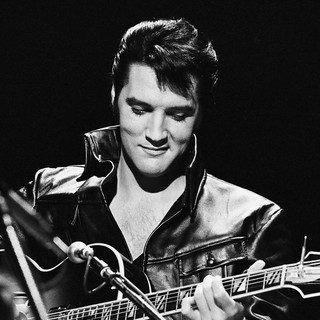

Bryan Adams
Elvis Aaron Presley was born on January 8, 1935, in Tupelo, Mississippi. He grew up in a humble household with his parents, Gladys and Vernon Presley. From a young age, Elvis was deeply influenced by gospel music, regularly attending the Assembly of God Church with his family. This early exposure to gospel music played a significant role in shaping his musical style. Despite their financial struggles, Elvis's parents nurtured his interest in music by buying him a guitar for his eleventh birthday. The Presleys moved to Memphis, Tennessee, when Elvis was 13, a transition that exposed him to a diverse musical scene. He attended L. C. Humes High School, where his shyness often masked his burgeoning talent. After graduating, Elvis worked as a truck driver while pursuing music on the side. His big break came when he walked into Sun Studio to record a few songs for his mother, catching the attention of producer Sam Phillips and setting the stage for his meteoric rise in the music industry.
Elvis Presley's ascent to fame began in 1954 when he recorded his first single, 'That's All Right', at Sun Studio in Memphis. The track was a fusion of country and rhythm and blues, and it captivated listeners for its unique sound. Sam Phillips, the owner of Sun Records, believed that Elvis's voice and style could bridge the gap between the black and white musical worlds, a vision that proved transformative for the music industry. Elvis's groundbreaking performances on popular television shows like 'The Ed Sullivan Show' further catapulted him into the national spotlight, making him a household name. His charismatic stage presence, controversial gyrating dance moves, and deep, soulful voice earned him the nickname 'The King of Rock and Roll.' By the late 1950s, Elvis had achieved massive success with hits like 'Heartbreak Hotel,' 'Jailhouse Rock,' and 'Blue Suede Shoes,' cementing his status as a cultural icon.
Elvis Presley's discography is rich with iconic hits that have stood the test of time. Some of his most famous songs include 'Heartbreak Hotel,' 'Hound Dog,' 'Jailhouse Rock,' 'Love Me Tender,' 'Suspicious Minds,' and 'Can't Help Falling in Love.' Each of these tracks showcases Elvis's versatility as a performer and his ability to blend various musical influences. Among his celebrated albums, 'Elvis Presley' (1956), his self-titled debut, is legendary for its role in defining the rock and roll genre. 'Elvis’ Christmas Album' (1957) is one of the best-selling holiday albums of all time, demonstrating his appeal across different musical themes. Another fan favorite, 'From Elvis in Memphis' (1969), marked his successful comeback, featuring hits like 'In the Ghetto.' Throughout his career, Elvis released over 20 studio albums, each contributing to his enduring legacy and influence on subsequent generations of musicians.
Although Elvis Presley rarely recorded official duets with other artists, he was deeply respected and admired by his peers. His influence was so profound that many artists sought to emulate or integrate his style into their work. While he may not have had many direct collaborations in the studio, Elvis's impact was felt through informal jam sessions and live performances. For example, 'The Million Dollar Quartet,' an impromptu session that included Johnny Cash, Jerry Lee Lewis, and Carl Perkins, took place at Sun Studio, capturing a legendary moment in rock and roll history. Furthermore, many contemporary artists, such as Frank Sinatra who he appeared with on television, appreciated his work, leading to meaningful cross-genre interactions. Elvis’s charismatic presence and revolutionary sound inspired countless musicians across various genres, indirectly influencing collaborations by broadening stylistic and cultural horizons in music.
Elvis Presley's career was decorated with numerous awards and recognitions, reflecting his profound impact on the music industry. He received three Grammy Awards, all for his gospel music, which underscored his roots in the genre and showcased the breadth of his talent. In 1971, Elvis was also honored with the Grammy Lifetime Achievement Award at the young age of 36, a testament to his significant influence and contributions. Posthumously, he continued to receive accolades, including induction into multiple music halls of fame, such as the Rock and Roll Hall of Fame in 1986, the Country Music Hall of Fame in 1998, and the Gospel Music Hall of Fame in 2001. These honors highlight not only his prowess in rock and roll but also his versatile contributions to country and gospel music. Elvis's global fanbase and enduring legacy further attest to his stature as one of the most iconic figures in music history.
Although Elvis Presley passed away in 1977, his music continues to be celebrated, and new compilations and remastered editions are frequently released to honor his enduring legacy. One of the notable recent releases is the 'Elvis: The Searcher' (2018) soundtrack, accompanying a documentary that delves into his life beyond the public persona. The collection features rare and alternate versions of tracks, providing fresh insights into his artistry. Additionally, periodic reissues with expanded content, like deluxe editions of his pivotal albums, offer fans enhanced listening experiences with improved audio quality and bonus material. These efforts by record labels to preserve and share new aspects of Elvis's work ensure that his music remains relevant for contemporary audiences. While there are no 'new' Elvis recordings, technology, and careful curation continue to introduce his timeless sounds to new generations of fans across the world.
Elvis Presley was not only a music icon but also a fascinating individual with many lesser-known aspects to his life. For instance, he was known for his love of food, with a particular fondness for peanut butter and banana sandwiches, a culinary quirk that has since become legendary. Elvis was also an avid collector of badges from police departments nationwide, even being sworn in as an honorary officer in multiple states. Additionally, he had a black belt in karate, which he often incorporated into his stage performances. Beyond his persona as a performer, Elvis served in the U.S. Army from 1958 to 1960, a period during which he was stationed in Germany. His deep love of his mother, Gladys, was well-known, and her passing in 1958 was a significant personal blow to him. These intriguing facets of his character and life contribute to the lasting allure of 'The King.'
Elvis Presley's live performances were an electrifying experience, characterized by his dynamic stage presence and the ability to captivate large audiences. Known for his captivating charisma, gyrating dance moves, and powerful voice, his concerts were groundbreaking, setting a new standard for live rock and roll performances. Elvis began touring nationally in the mid-1950s and achieved immense success, though he stopped touring outside the U.S. after his military service. His famed '68 Comeback Special, a televised performance, marked his return to the stage and reignited his career. Throughout the 1970s, Elvis embarked on numerous tours across the United States, performing sold-out shows in iconic venues, including a record-setting run at the Las Vegas International Hotel. His 1973 'Aloha from Hawaii via Satellite' concert was broadcast live to over a billion people worldwide, exemplifying his global appeal and technological innovation in reaching fans. His live shows, marked by energy and passion, remain a significant part of his legendary legacy.
Even though Elvis Presley passed away decades before the advent of social media, his legacy continues to thrive across various platforms. Managed by Elvis Presley Enterprises, his official accounts on Instagram, Facebook, and Twitter engage millions of followers worldwide. These platforms are used to celebrate and preserve his music, share behind-the-scenes photos and videos, and promote new releases or events related to his work. The social media presence ensures that both new and long-time fans remain connected to his legacy. Moreover, Graceland, his former residence turned museum, holds the title of world's most famous rock 'n' roll residence, regularly hosting virtual events and interactive experiences. This management not only maintains Elvis's enduring presence in popular culture but also introduces his timeless music to new audiences, ensuring 'The King' remains an integral figure in the digital age. This strategic approach has made his legacy just as vibrant today as during his lifetime.
The legacy of Elvis Presley continues to inspire new projects and endeavors aimed at celebrating his life and music. Even decades after his passing, plans for reissues, documentaries, and virtual experiences are frequently announced. Recent projects include biographical films and extensive box sets that commemorate significant milestones in his career. Graceland, his iconic estate in Memphis, is continuously expanded and enhanced with new exhibits and events to attract visitors worldwide. Additionally, collaborations with contemporary artists and producers often lead to remixed or reimagined versions of his songs, introducing his music to younger generations. Advances in technology have also made hologram tours a possibility, potentially allowing fans to experience live re-creations of his legendary performances. These initiatives ensure that Elvis's influence endures, offering both nostalgic fans and new listeners ways to engage with and appreciate his monumental contributions to music and culture.
My Music Pie Chart
This innovative tool helps you visualize your music habits into a colorful pie charts
© 2026 My Music Pie Chart. All rights reserved